
Molecular Diagnosis of Lactobacillus spp. Isolated from Females Infected with Bacterial Vaginosis
DOI:
https://doi.org/10.67329/sk9edc41Keywords:
Bacterial Vaginitis, Lactobacillus crispatus, Lactobacillus gasseri, Molecular Diagnosis, Probiotic bacteriaAbstract
Background: Indigenous lactobacilli in the vaginal microbiota play a crucial role in maintaining women's health. It can contribute to microbial homeostasis by producing lactic acid, hydrogen peroxide, and a range of antimicrobials, which inhibit the growth of pathogens. This dynamic interplay helps preserve the vaginal ecosystem and prevent infections. Bacterial vaginosis (BV) is a clinical condition characterized by decreased microbiota and an increased number of aerobic and anaerobic pathogenic microorganisms, such as Gardnerella spp., genital mycoplasmas, and Candida spp.
Objectives: This study aimed to isolate, purify, identify, and diagnose the vaginal Lactobacilli from females who are in vaginitis dysbiosis in Baghdad city, using molecular techniques
Methods: Of forty-two adult females suffering from bacterial vaginitis, only 12 isolates of the purified Lactobacillus spp. were identified on a molecular level in this study.
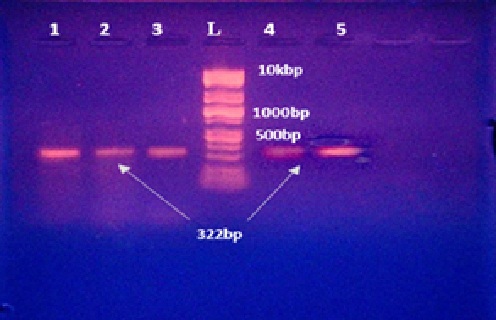
Results: The results of molecular diagnosis using 16S rRNA revealed that seven isolates were diagnosed as Lactobacillus crispatus, while the other five isolates were Lactobacillus gasseri. The diagnosis protocol included application of a specific forward and reverse 16S rRNA primers with an amplicon size of 154bp (for L. crispatus) and 322bp (for L. gasseri).
Conclusion: The polymerase chain reaction (PCR) method stands out as the most efficient technique for characterizing the vaginal microbiome's composition. The predominant Lactobacillus spp. among BV-infected women are L. crispatus, followed by L. gasseri.
Downloads
Downloads
Published
License
Copyright (c) 2026 Susan Abdul Raheem Hassan (Author)

This work is licensed under a Creative Commons Attribution 4.0 International License.